Introduction
Starting a brewery or expanding an existing beer production facility requires careful planning, especially when selecting the right equipment. In 2026, brewery owners face increasing pressure to improve production efficiency, control operating costs, maintain consistent beer quality, and respond to changing consumer preferences. Choosing suitable Beer Brewing Equipment is therefore an important investment decision that directly affects long-term brewery operations.
However, selecting brewing equipment involves more than comparing prices or choosing tanks with larger capacities. Buyers need to consider production targets, brewing processes, equipment configurations, automation levels, available factory space, and future expansion plans. A system that works well for a small craft brewery may not meet the production requirements of a commercial beer manufacturer.
Whether you are establishing a microbrewery, developing a brewpub, or investing in a large-scale brewing facility, understanding these factors can help you avoid unnecessary expenses and build a more efficient production system.
This guide explains how to choose the right Beer Brewing Equipment in 2026, covering production capacity, equipment types, technical specifications, investment costs, and manufacturer selection.
Define Your Brewery's Production Capacity and Business Goals
Before comparing equipment models, determine how much beer your brewery plans to produce and what type of brewing operation you intend to establish. These factors provide the foundation for selecting appropriate equipment capacities and configurations.
Estimate Your Expected Beer Production Volume
Start by calculating your expected daily, monthly, and annual beer output. Consider the number of brewing batches you plan to complete each day, the working volume of each batch, and the time required for fermentation and maturation.
For example, a brewery producing several batches per week may require a different brewhouse configuration from a facility operating multiple shifts with continuous production schedules.
When estimating capacity, consider:
Target annual beer production.
Brewhouse working volume per batch.
Number of brewing batches per day.
Fermentation and maturation time.
Expected seasonal demand.
Potential production growth.
It is also important to distinguish between brewhouse capacity and finished beer output. Fermentation time, cleaning schedules, transfer processes, and packaging operations all influence actual production capacity.
Choosing Beer Brewing Equipment based on realistic production forecasts helps prevent both insufficient capacity and unnecessary initial investment.
Choose Equipment Based on Your Brewery Type
Different brewery business models have different equipment requirements.
Microbreweries generally need compact brewing systems that support small-batch production and flexible recipes. Equipment with a smaller footprint can help reduce initial investment and make better use of limited production space.
Craft breweries often require more flexible configurations to produce different beer styles, including ales, lagers, and seasonal specialty beers. Appropriate fermentation capacity and temperature control are important considerations.
Commercial breweries usually need larger brewing systems with coordinated fermentation, cooling, storage, and packaging equipment. Production consistency and operational efficiency become increasingly important as output grows.
Brewpubs typically prioritize space-efficient brewing systems that allow beer production and serving within the same facility. Equipment layout, ease of operation, and integration with the serving area are practical considerations.
Understanding your brewery type helps narrow down the most suitable equipment capacity and configuration.
Consider Future Production Expansion
Equipment selection should also reflect your long-term business plans. A brewery that expects to increase production may benefit from a system that allows additional fermentation tanks or supporting equipment to be installed later.
Before purchasing, evaluate available floor space, utility capacity, cooling requirements, and the possibility of expanding the production line.
Planning for future growth does not necessarily mean purchasing oversized equipment at the beginning. Instead, choose a configuration that meets current demand while leaving practical options for expansion.
Understand the Main Types of Beer Brewing Equipment
A complete brewing operation involves several interconnected stages, from raw material preparation to fermentation, storage, and packaging. Understanding the function of each equipment category helps buyers select a properly coordinated production system.
Brewhouse System: The Core of Beer Production
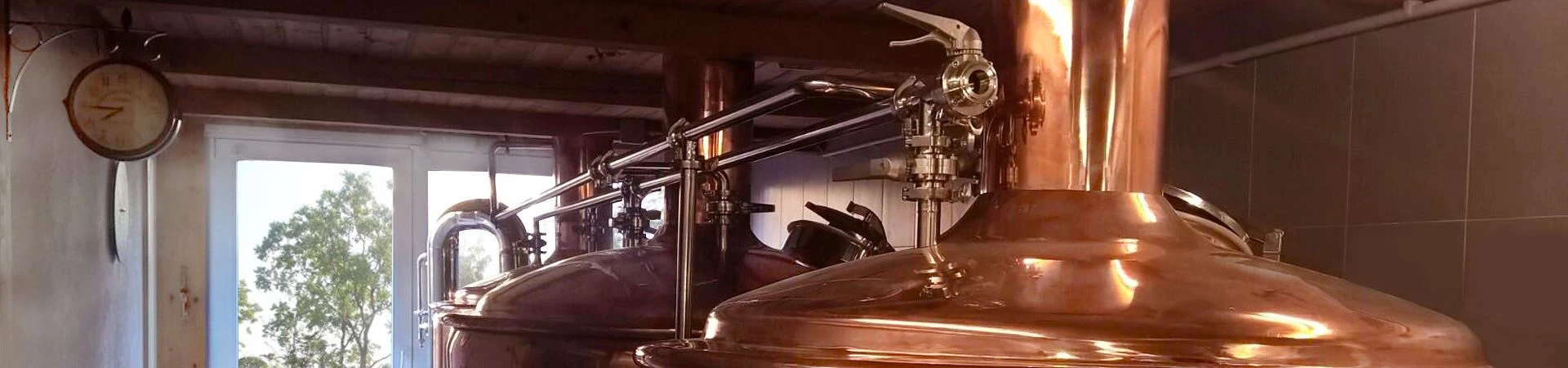
The brewhouse is the central part of a brewery. It handles the main brewing processes, including mashing, lautering, wort boiling, and whirlpool separation.
Depending on production requirements, breweries can choose between different brewhouse configurations.
Two-vessel brewhouse systems combine multiple processing functions within two main vessels. They are suitable for breweries seeking a relatively compact layout and a practical initial investment.
Three-vessel brewhouse systems separate the main brewing operations into three vessels, providing greater flexibility in process scheduling and equipment utilization.
Four-vessel brewhouse systems use dedicated vessels for individual processing stages. They are often considered by breweries with higher production requirements and more complex brewing schedules.
When comparing these systems, buyers should consider batch frequency, available space, labor requirements, investment budget, and desired production efficiency rather than choosing a configuration based on vessel count alone.
Fermentation Tanks: Supporting Consistent Beer Production
After wort cooling, the beer enters fermentation tanks, where yeast converts fermentable sugars into alcohol and carbon dioxide.
Fermentation tanks are among the most important components of Beer Brewing Equipment because their capacity and quantity directly influence production scheduling.
Key purchasing considerations include:
Tank working volume and total capacity.
Number of tanks required.
Fermentation temperature control.
Stainless steel construction.
Pressure and operating requirements.
Cleaning and maintenance accessibility.
The number of fermentation tanks should match the brewhouse output and the expected fermentation cycle. For example, breweries producing lager may require longer tank occupancy periods than facilities focusing on certain faster-fermenting beer styles.
Insufficient fermentation capacity can create production bottlenecks even when the brewhouse has enough capacity to produce additional wort.
Bright Beer Tanks and Beer Storage Equipment
Bright beer tanks are used for beer conditioning, carbonation management, and temporary storage before packaging or serving.
They help breweries manage finished beer between fermentation and the next production stage.
When selecting bright beer tanks, buyers should evaluate working capacity, pressure requirements, cooling arrangements, cleaning accessibility, and compatibility with the packaging system.
The required tank volume should also correspond to the brewery's packaging schedule and expected finished beer inventory.
Auxiliary Equipment for a Complete Brewing System
In addition to brewhouse vessels and fermentation tanks, a brewery requires supporting equipment to maintain an efficient production process.
Common auxiliary equipment includes:
Malt milling equipment: Processes malted grains before mashing.
Wort pumps: Transfer liquids between brewing vessels.
Heat exchangers: Cool hot wort before fermentation.
Glycol cooling systems: Maintain required temperatures for fermentation and beer storage.
CIP cleaning systems: Support cleaning and sanitation of tanks and pipelines.
Water treatment equipment: Helps prepare brewing water according to process requirements.
Kegging, bottling, and canning equipment: Packages finished beer for distribution.
When purchasing a complete Beer Brewing Equipment solution, buyers should confirm that the main vessels, cooling systems, pumps, pipelines, and packaging equipment are compatible with one another.
Evaluate Key Technical Factors Before Purchasing
After determining production requirements and equipment categories, the next step is to evaluate technical specifications. These details influence equipment durability, operating efficiency, cleaning requirements, and long-term maintenance.
Material Selection and Equipment Construction
Stainless steel is widely used in commercial brewing equipment because of its corrosion resistance, cleanability, and suitability for food and beverage processing.
SS304 is commonly used for brewery tanks, pipelines, and other equipment components. SS316L may be considered for applications requiring additional corrosion resistance, depending on the process conditions and cleaning chemicals used.
Buyers should also examine:
Internal and external surface finishes.
Welding quality and structural construction.
Tank insulation materials.
Manhole and access design.
Drainage and cleaning arrangements.
Surface areas in contact with beer and brewing liquids.
Material selection should be based on actual operating conditions rather than assuming that a higher-grade material is necessary for every component.
Heating and Cooling System Configuration
Heating and cooling systems influence both brewing performance and operating expenses.
Common heating options include electric heating, steam heating, and direct-fire heating.
Electric heating can be suitable for smaller installations where electrical capacity is sufficient. Steam heating is often considered for larger brewing facilities with appropriate boiler infrastructure. Direct-fire heating may be an option for certain brewery configurations, depending on equipment design and local requirements.
Cooling systems also require careful evaluation. Glycol cooling systems are widely used to maintain fermentation and storage temperatures, while heat exchangers are commonly used to cool wort before fermentation.
Before purchasing, check the required heating power, cooling capacity, utility connections, and compatibility with the planned production schedule.
Automation and Control Systems
Automation is another important consideration when selecting Beer Brewing Equipment in 2026.
Brewing systems are generally available with manual, semi-automatic, and fully automatic control configurations.
Manual systems give operators direct control over individual brewing operations. They may be suitable for smaller breweries with experienced brewing personnel and limited production requirements.
Semi-automatic systems combine manual operation with automated controls for selected processes, helping simplify routine operations while maintaining operator involvement.
Fully automatic systems use integrated control systems to manage multiple brewing stages. They can help improve process repeatability and reduce the amount of manual intervention required.
The appropriate automation level depends on production volume, labor availability, operating experience, and investment budget. A fully automatic system is not necessarily the best choice for every brewery.
Energy Efficiency and Water Consumption
Energy and water consumption contribute significantly to long-term brewery operating costs.
When evaluating equipment, buyers should pay attention to:
Heating system efficiency.
Tank insulation performance.
Cooling system capacity and efficiency.
Pump and motor power consumption.
Water requirements for brewing and cleaning.
Opportunities for heat recovery.
For example, effective insulation can help reduce unnecessary heat loss, while an appropriately designed cooling system can support stable fermentation temperatures without excessive energy consumption.
Evaluating these factors before purchasing helps breweries consider the total cost of ownership rather than focusing exclusively on the initial equipment price.
Calculate Your Budget and Compare Equipment Suppliers
A realistic equipment budget should cover more than the purchase price of the main brewing vessels. Buyers need to understand the full project scope before comparing supplier quotations.
Understand the Total Investment Cost
The total investment for a brewery project may include:
Brewhouse and fermentation equipment.
Bright beer tanks and storage vessels.
Cooling and heating systems.
Malt milling and material handling equipment.
Pumps, pipelines, and valves.
CIP and water treatment systems.
Bottling, canning, or kegging equipment.
Transportation and installation.
Electrical and plumbing connections.
Maintenance and operating expenses.
The actual cost depends on production capacity, equipment configuration, material specifications, automation level, and project requirements.
When requesting quotations, provide suppliers with your target production volume, preferred equipment arrangement, available factory space, and utility conditions. This makes it easier to compare technically equivalent proposals.
Compare Equipment Specifications and Configurations
Two brewing systems with similar capacities may have significantly different configurations.
One quotation may include fermentation tanks, a glycol cooling system, pumps, and pipelines, while another may cover only the brewhouse vessels.
For an accurate comparison, check the following details:
|
Evaluation Item
|
What Buyers Should Check
|
|
Production capacity
|
Batch volume and expected output
|
|
Tank configuration
|
Vessel quantity and working volume
|
|
Material
|
Stainless steel grade and construction
|
|
Heating system
|
Electric, steam, or direct fire
|
|
Cooling system
|
Cooling capacity and configuration
|
|
Automation
|
Manual, semi-automatic, or automatic
|
|
Auxiliary equipment
|
Pumps, pipelines, valves, and CIP
|
|
Technical support
|
Installation guidance and after-sales service
|
A detailed specification comparison helps buyers identify differences in equipment scope and avoid unexpected costs after ordering.
How to Choose a Reliable Beer Brewing Equipment Manufacturer
Selecting the right manufacturer is just as important as selecting the equipment itself.
For international buyers sourcing from China, it is advisable to evaluate suppliers based on their actual manufacturing capabilities, product range, engineering experience, and communication quality.
Important considerations include:
Manufacturing experience: Review the company's background, production facilities, and experience supplying brewery equipment.
Product range: Check whether the manufacturer can provide the main brewing vessels and the supporting equipment required for your project.
Customization capabilities: Confirm whether tank dimensions, capacities, heating methods, and equipment configurations can be adapted to your production requirements.
Technical documentation: Request detailed equipment specifications, drawings, material information, and utility requirements.
Quality management: Ask about applicable quality management systems, manufacturing procedures, and available inspection documentation.
After-sales support: Clarify the scope of technical assistance, installation guidance, spare parts availability, and warranty arrangements.
A reliable supplier should be able to explain how its proposed equipment configuration meets your production requirements rather than simply recommending the most expensive system.
Why Consider a Complete Beer Brewing Equipment Solution?
Purchasing a coordinated brewing system can simplify project planning and equipment integration.
When the brewhouse, fermentation tanks, cooling system, and supporting equipment are planned together, buyers can better coordinate production capacity, utility requirements, and installation arrangements.
A complete solution can also help reduce communication between multiple equipment suppliers and make future maintenance and expansion planning more straightforward.
For breweries developing a new facility, working with a manufacturer that offers a broad range of Beer Brewing Equipment can make the procurement process more manageable.
Common Mistakes to Avoid When Buying Beer Brewing Equipment
Even experienced buyers can overlook important details when purchasing brewery equipment. Avoiding the following mistakes can help reduce investment risks and improve long-term operating efficiency.
Choosing Equipment Based Only on Purchase Price
A lower quotation does not always represent better value. Differences in stainless steel specifications, tank construction, insulation, auxiliary equipment, and technical support can significantly affect the actual value of a proposal.
Compare the complete equipment scope and long-term operating requirements before making a decision.
Ignoring Fermentation and Cooling Capacity
Some breweries focus heavily on brewhouse capacity but underestimate the requirements of fermentation and cooling.
If fermentation tanks are insufficient or the cooling system cannot support the planned production schedule, overall brewery output may be restricted.
The brewhouse, fermentation area, and cooling system should therefore be planned as an integrated production system.
Overlooking Brewery Layout and Available Space
Equipment dimensions and installation requirements should be confirmed before ordering.
Consider factory floor dimensions, ceiling height, drainage arrangements, pipeline routes, equipment access, and maintenance space.
A detailed brewery layout helps prevent installation difficulties and unnecessary modifications.
Buying Equipment Without Considering Future Expansion
Purchasing equipment without considering future growth can create additional costs when production demand increases.
For example, a brewery may need to add fermentation tanks, upgrade cooling capacity, or modify existing pipelines.
Planning for expansion at the beginning can make future upgrades easier and reduce the need for major changes to the original installation.
Failing to Confirm Equipment Scope Before Ordering
Before signing a purchase agreement, ensure that the technical specifications and supply scope are clearly documented.
Confirm equipment models, quantities, tank capacities, materials, included accessories, electrical requirements, delivery arrangements, warranty terms, and technical support responsibilities.
Clear documentation helps both the buyer and manufacturer maintain consistent expectations throughout production and delivery.
Conclusion: Make a Smarter Investment in Beer Brewing Equipment in 2026
Choosing the right Beer Brewing Equipment requires a clear understanding of production goals, equipment configurations, technical specifications, and long-term operating costs. Whether you are planning a microbrewery, expanding a craft beer facility, or developing a commercial brewery, the equipment should match your actual production requirements and business development plans.
Before making a purchasing decision, evaluate five essential factors: production capacity, brewhouse and fermentation configuration, equipment materials and technical performance, total investment cost, and manufacturer reliability.
A well-planned brewing system can help improve production coordination, maintain consistent brewing processes, and provide a practical foundation for future expansion.
If you are looking for brewery equipment for a new project or an existing production facility, explore the Beer Brewing Equipment solutions from Taian Accurun Machinery Co., Ltd. to compare available equipment configurations and find a system that matches your brewery's production requirements.

 Language